
 Bitatin.internationaltrading@gmail.com
 +989331038224


 Bitatin.internationaltrading@gmail.com
+989331038224
Bitatin.internationaltrading@gmail.com
+989331038224

 Bitatin.internationaltrading@gmail.com
 +989331038224


Comprehensive Guide to Fig Cultivation – Part 1
From Land Selection to Fig Propagation by Cuttings
Choosing the Ideal Land: Where Do Fig Trees Grow Best?
Growing fig trees successfully starts with choosing the right land. From soil quality to the way cuttings are planted, every detail can affect the health and productivity of the tree.
In this guide, based on traditional agricultural knowledge and the experience of generations of local farmers, we explain the key steps for successfully growing fig trees.
Choosing the right location is the first step toward a healthy and productive fig orchard. For the best results, pay attention to these three important factors:
Land with north-facing slopes can be a good choice for growing fig trees because it receives less direct sunlight and can retain moisture for longer periods.
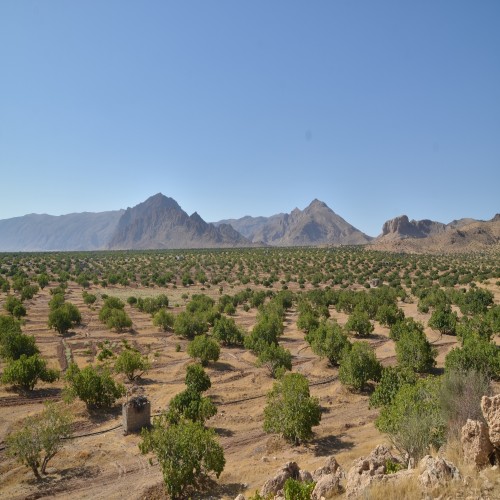
Fig trees grow particularly well along seasonal riverbeds, mountain slopes, and areas with good natural drainage. They generally perform better in these locations than in flat lowland areas and dry desert regions.
Planting fig trees on mountain slopes can also help protect them from severe winter cold.
The ideal soil for fig trees is traditionally considered to be brown or chestnut-colored soil.
An old and simple method used by experienced farmers to assess soil quality is the white cloth test. Rub some soil against a piece of white cloth. If the soil sticks well to the fabric, it is considered rich and fertile soil, which can be suitable for fig cultivation.
In addition, rocky soils are traditionally believed to produce figs with a lighter color and good quality.
 About Bitatin
We proudly notify that we use the most updated and high-tech machinery like color sorting machine, a fully equipped laboratory, popular certifications like Global Gap to produce our highest quality products according to the global standards of the world to attract the customer satisfaction.
Member of the :
- Board of directors of Estahban Fig Trade Union
- National Fig Association - Board of experts of Iranian fig
 Links
Links
 Contact Us


 Follow Us