
 Bitatin.internationaltrading@gmail.com
 +989331038224


 Bitatin.internationaltrading@gmail.com
+989331038224

 Bitatin.internationaltrading@gmail.com
 +989331038224


Propagation and Planting Techniques Using Cuttings
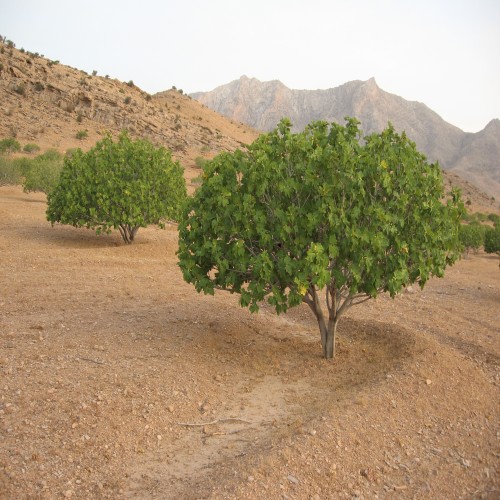
The main method of propagating fig trees is using cuttings. To grow a healthy and productive fig tree, follow these steps:
The cutting should be taken from a young, healthy tree, preferably less than 5–6 years old. It should have healthy bark, with no signs of dead or damaged bark, and should come from a high-quality, productive tree that produces good-quality fruit.
The cutting should be approximately three hand spans long.
Place the cuttings in moist soil so that they can begin developing roots and remain protected from dry air.
First, fill the bottom of the planting pit with a few centimeters of topsoil.
Then place the cutting vertically or at a slight angle in the pit and cover it with soil.
Important: Never plant the cutting upside down.
To prevent losing the exact location of the planted cutting, place a stone next to it as a marker.
The “Kaleh Kardan” Stage
A few days after planting, an important stage known locally as “Kaleh Kardan” begins, along with the initial care of the cuttings.
Remove the marker stones and use a small metal rod or stick to gently loosen and turn over the soil around the planted cutting.
This process, locally known as “Karkar Kardan,” helps loosen compacted soil and creates small air spaces that allow the new shoot to develop properly.
Place several stones on top of one another to create a small protective cavity above the planted cutting, and then cover the stones with soil.
This protects the newly emerging shoots from cold weather and damage caused by insects and worms.
 About Bitatin
We proudly notify that we use the most updated and high-tech machinery like color sorting machine, a fully equipped laboratory, popular certifications like Global Gap to produce our highest quality products according to the global standards of the world to attract the customer satisfaction.
Member of the :
- Board of directors of Estahban Fig Trade Union
- National Fig Association - Board of experts of Iranian fig
 Links
 Contact Us


 Follow Us